2026 HSC chemistry exam paper exemplar answers & solutions

Section I: Multiple choice
MCQ answer key
- B
- A
- A
- B
- C
- B
- D
- D
- A
- C
- A
- C
- C
- B
- D
- A
- D
- B
- B
- A
Question 1
The three organic compounds are all alcohols containing the same hydroxyl (–OH) functional group. Compounds that share the same functional group and differ by a CH2 unit between successive members belong to the same homologous series.
Question 2
From the options provided, Cl–(aq) ions will only precipitate with Ag+(aq) ions:
Ag+(aq) + Cl–(aq) → AgCl(s)
Question 3
Option A: When temperature is increased, by Le Chatelier’s principle, the system will shift to decrease temperature by favouring the forward endothermic reaction. Hence, the system will shift right and this is the correct answer.
Option B: When more iodine is added to the system by Le Chatelier’s principle, the system will shift to decrease the concentration of iodine by favouring the reverse reaction which consumes it. Therefore, the system will shift left.
Option C: When volume is changed the pressure of the system will change. By Le Chatelier’s principle, the system will shift to increase or decrease pressure by favouring the side of more or less gaseous moles. However, since there are equal moles of gas on both sides of the equation, this system will not shift upon a change in volume.
Option D: Adding a catalyst does not shift the position of equilibrium, as it increases the rates of the forward and reverse reactions equally. Therefore, the rates remain equal, and the system remains at dynamic equilibrium.
Question 4
The conversion of gypsum into plaster removes water in the process. Therefore, this process is best described as dehydration.
Question 5
A conjugate acid-base pair differs by one proton.
Therefore, H2PO4– and HPO42– is the only conjugate acid-base pair.
Question 6
Sodium acetate (NaCH3COO) is a soluble salt. When added to the water it will dissociate into Na+(aq) and CH3COO–(aq) ions: NaCH3COO(s) → Na+(aq) + CH3COO–(aq).
CH3COO–(aq) is the weak conjugate base of the weak acid CH3COOH(aq). Therefore, it will proceed to partially hydrolyse in solution, producing OH–(aq) ions and increasing the pH of the solution: CH3COO–(aq) + H2O(l) ⇌ CH3COOH(aq) + OH–(aq).
All species present in the solution are colourless; therefore, the solution will appear colourless. Additionally, no gas will be produced.
Therefore, the correct answer is option B.
Question 7
The numerator of a Keq expression represents the products, whereas the denominator of a Keq expression represents the reactants. The power terms represent the coefficients in the corresponding chemical equation.
In addition, any pure solids or liquids are excluded from the equilibrium expression which eliminates option A.
Thus, the correct chemical equation is option D, 4NH3(g) + 5O2(g) ⇌ 4NO(g) + 6H2O(g).
Question 8
Option A: Ca2+ does not possess any H+ it can donate. As a cation, it also does not attract, nor accept H+ ions. As such, it is a spectator ion in the context of acid-base chemistry. It will not change the pH of the solution.
Option B: Colourimetry shines light of complementary colour to the solution to probe the concentration of the analyte. Ca2+ is a colourless ion, and thus possesses no complementary colour that can be used for colourimetry.
Option C: An acid-metal reaction only produces a gas (hydrogen gas) when it’s a reaction between an acid and a neutral metal. Ca2+ is already oxidised into its ion form, and will thus not react with nitric acid.
Option D: Ca2+ will precipitate with OH– ions in sodium hydroxide: Ca2+(aq) + 2OH–(aq) → Ca(OH)2(s). The resultant white precipitate is therefore indicative of the presence of Ca2+.
Hence, the correct answer is option D.
Question 9
When the volume is decreased, every gas is compressed by the same extent, so their concentration instantaneously increases in the same ratio relative to their original concentration.
The only option which shows such an immediate increase in concentration is option A.
Question 10
The described reaction results in an addition reaction, and the following product:
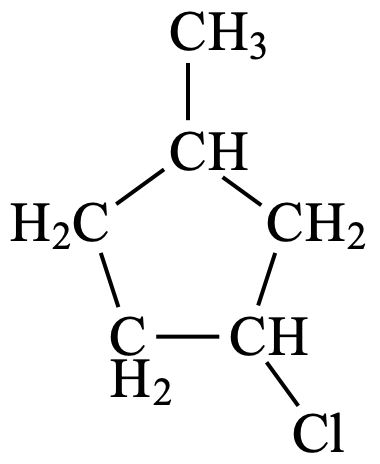
This compound has a methyl group and a chlorine atom on a cyclopentane, and is thus named 1-chloro-3-methylcyclopentane.
Question 11
LDPE has extensive chain branching as indicated by the high branch to chain ratio. HDPE has minimal chain branching as indicated by the low branch to chain ratio.
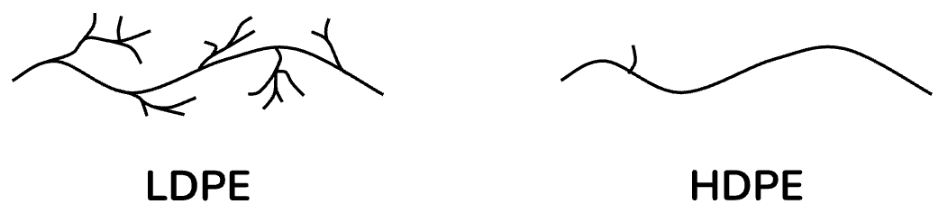
Option A: The extensive branching in LDPE prevents polymer chains from packing closely together, which allows light to pass through the material. This is the correct answer.
Option B: LDPE is flexible due to it having extensive chain branching which results in weaker dispersion forces. allowing the polymer chains to move more easily relative to one another. This statement is incorrect.
Option C: The physical properties of polymers depend on their intermolecular forces, not intramolecular forces. LDPE has lower tensile strength than HDPE due to its extensive chain branching, which results in weaker dispersion forces. This statement is incorrect.
Option D: HDPE has a higher density due to minimal chain branching, which allows polymer chains to pack more closely together, resulting in more polymer chains per unit volume.
Question 12
Based on the percentage composition by mass provided, the number of moles of each element in a 100 g sample can be deduced as follows:
Hence, the empirical formula of the compound is CH2O.
Option A: Methanol has a molecular and empirical formula of CH4O.
Option B: Propanone has a molecular and empirical formula of C3H6O.
Option C: Ethanoic acid has a molecular formula of C2H4O2 and an empirical formula of CH2O.
Option D: Methyl ethanoate has a molecular and empirical formula of C3H6O2.
Therefore, the correct answer is option C.
Question 13
The solution is saturated when:
Qsp = Ksp = [Pb2+][Br–]2 = 6.60 x 10⁻⁶
Let the molar solubility of PbBr2 be x. Then:
Hence,
x(0.500 + 2x)2 = 6.60 x 10⁻⁶
Since the Ksp is small and there are already common ions present, x must be small. Hence, by the small change assumption, 0.500 + 2x ≈ 0.500
Thus, x(0.500)2 = 6.60 x 10⁻⁶
⇒ x = 6.60 x 10⁻⁶ / (0.500)2 = 2.64 x 10⁻⁵ molL–1
Question 14
An acidified potassium permanganate solution is usually pink. Its turning colourless is indicative of its reduction to Mn2+. As such, the unknown liquid must be a molecule capable of being oxidised.
Bromine water remaining brown is indicative of the solution not possessing any carbon-carbon double or triple bonds, as either would undergo addition reaction with the bromine in bromine water to decolourise the bromine water solution.
Option A: 2-methylpropene contains a carbon-carbon double bond.
Option B: 2-methylpropanal can be oxidised to form 2-methylpropanoic acid, and it does not contain a carbon-carbon double bond.
Option C: 2-methylpropan-2-ol is a tertiary alcohol, and thus does not oxidise.
Option D: 2-methylpropanoic acid cannot undergo further oxidation.
Hence, the correct answer is option B.
Question 15
The equilibrium expression for this reaction as expressed is:
Keq = [SO3]2 / [SO2]2[O2]
Substituting in the concentrations, we have:
Keq = (5.0 x 10⁻²)2 / (3.0 x 10⁻³)2(3.5 x 10⁻³) = 7.9 x 10⁴
Question 16
The indicated signal is a triplet. By the n + 1 rule of spin-spin coupling, there must be two neighbouring hydrogen atoms.
Option A: Has 2 neighbouring hydrogens.
Option B: Has 1 neighbouring hydrogen.
Option C: Has no neighbouring hydrogens.
Option D: Has 3 neighbouring hydrogens.
Hence, the correct answer is option A.
Question 17
Reading off of the calibration curve, an absorbance of 0.37 corresponds to [Fe3+] = 14.5 mgmL–1 = 14.5 gL–1 = (14.5 g / 55.85 gmol–1) L–1 = 0.259623993 molL–1
Since KSCN(aq) was added in excess to convert all Fe3+(aq) to FeSCN2+(aq), [Fe3+] = [FeSCN2+], and [Fe3+]diluted 25 mL solution = 0.259623993 molL–1.
[Fe3+]250 mL = [Fe3+]10 mL = 0.259623993 x (25 / 10) = 0.649059982 molL–1
Therefore, n(Fe3+)sample = n(Fe3+)250 mL = 0.649059982 x 0.25 = 0.162264996 mol
m(Fe3+)sample = 0.162264996 x 55.85 = 9.06250003 g
Hence, the percentage composition by mass of iron is (9.06250003 / 20.54) x 100% = 44.121227% ≈ 44% (2 s.f.)
Question 18
The low pKa values (and thus high Ka) for HCl(aq) and H2SO4(aq) are indicative of the two being strong acids, which ionise to completion.
The high pKa values (and thus low Ka) for H3PO4(aq) and H4P2O7(aq) are indicative of the two being weak acids. Their first ionisation thus produces a significantly lesser number of H+(aq) ions than the strong acids. As such, these acids will have a higher pH.
Between HCl(aq) and H2SO4(aq), their first ionisation goes effectively to completion, with the Ka of the first ionisation being 107 and 103 respectively.
On top of the first ionisation which effectively goes to completion, any ionised HSO4–(aq) is able to undergo a second ionisation with a non-negligible Ka of 10–1.9. As such, it produces more H+(aq) ions overall.
Therefore, the correct answer is option B.
Question 19
From the mass spectrum, the compound has a molar mass of ~56 gmol–1. Given that the compound is specified as being a hydrocarbon, there are likely 4 carbon atoms and 8 hydrogen atoms.
From the IR spectrum, the trough at 1662 cm–1 is indicative of the presence of a C=C bond.
From the proton NMR spectrum, the presence of two singlet peaks is indicative of there being two hydrogen environments, each with no neighbouring hydrogens.
The fact that compound P reacts with bromine to form a new substance is indicative of an addition reaction, further affirming the presence of the C=C bond.
The only such hydrocarbon compound which satisfies these observations is 2-methylprop-1-ene.
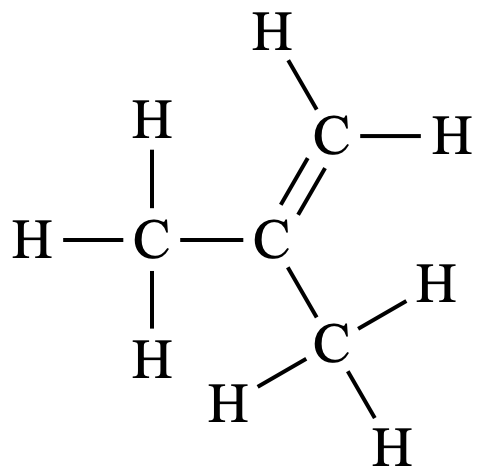
Upon undergoing addition reaction with bromine, there will be 3 carbon environments overall labelled as follows:
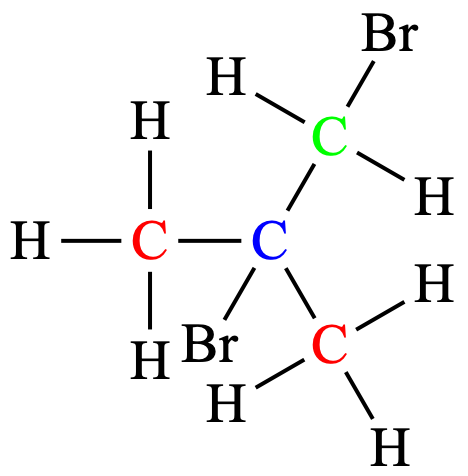
Therefore, the correct answer is option B.
Question 20
The reaction that occurs when the two beakers are mixed together is an acid-base reaction between HCl(aq) and NaOH(aq).
HCl(aq) + NaOH(aq) → NaCl(aq) + H2O(l)
Since phenolphthalein is initially only ever present with HCl(aq), an acid, it would be colourless in the beginning. As such, all 4 options satisfy the initial observation of both beakers containing a colourless solution.
Initially, the number of moles of H+(aq) or OH–(aq) in each beaker is (whichever is in excess):
After the first solution transfer, the ion in excess in each beaker are:
Since beaker Y turns pink after the first solution transfer, it must be basic. That rules out option C.
After the second solution transfer, the ion in excess in each beaker are:
Since beaker X remains colourless after the second solution transfer, it must be acidic. The only option which results in beaker X holding excess acid is option A.
Section II: Written responses
Question 21
Exemplar answer
Cd2+(aq) + S2–(aq) → CdS(s)
Question 22
Exemplar answer
Prepare two solutions of 25.0 mL solutions of 1.00 molL-1 of HNO3 and 1.00 molL-1 KOH, measuring the volumes using a 25.0 mL pipette. Ensure both solutions are at room temperature, and measure their temperature using a thermometer. Mix together the two 25.0 mL solutions in a lidded nested styrofoam cup. As the reaction proceeds, heat is released because the reaction is exothermic.
HNO3(aq) + KOH(aq) → KNO3(aq) + H2O(l) ∆Hº < 0
Record the maximum temperature the thermometer reaches using a hole in the lid. By calculating the difference between the initial and maximum temperatures (∆T) for the reaction, the formulas q = mc∆T and ∆Hº = –q / n may be used to determine the heat of neutralisation.
Marker’s notes
- The heat of neutralisation typically refers to the magnitude of ∆Hº and would be recorded as a positive answer
Question 23
Exemplar answer
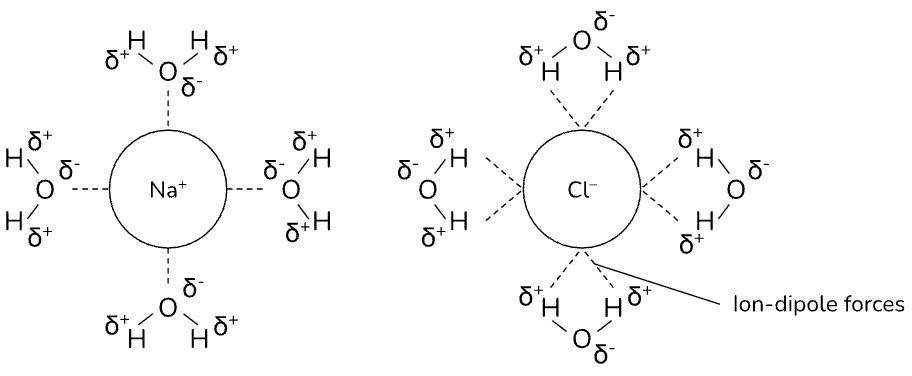
When NaCl dissolves in water, ionic bonding in the lattice of sodium chloride and intermolecular forces between water molecules (hydrogen bonding, dipole-dipole forces and dispersion forces) must be overcome. As NaCl is highly soluble in water, the solute-solvent interactions are more favourable than these preexisting forces.
As water is a polar molecule, it can form electrostatic attractions with ions called ion-dipole forces. The partial negative charge on oxygen in water is attracted towards Na+ cations, and the partial positive charge on hydrogen in water is attracted towards Cl– anions. This results in the formation of hydration shells, where multiple water molecules surround an ion, allowing the ions to be dispersed throughout the water, as illustrated below.
Question 24
Exemplar answer
A buffer solution is a mixture of a weak acid and its weak conjugate base in comparable concentrations that is able to resist small changes in pH.
CH3COOH(aq) + H2O(l) ⇌ CH3COO–(aq) + H3O+(aq)
When a strong acid is added to the buffer solution, the concentration of H3O+(aq) ions increases, resulting in the pH decreasing by pH = –log10[H3O+]. By Le Chatelier’s Principle, the equilibrium shifts to the left to minimise the disturbance by decreasing the concentration of [H3O+], thereby minimising the change in pH. However, there is still a net decrease in pH as the disturbance cannot be nullified.
When X mL of acid is added, the pH of the buffer solution rapidly decreases. This is because as the equilibrium shifts to the right, CH3COO– ions are depleted, reducing the solution's buffer capacity. Once this occurs, the equilibrium can no longer shift to the right and resist the change in pH, resulting in a rapid decrease in pH.
Question 25(a)
Exemplar answer
Ethanol is produced by fermenting glucose under anaerobic, aqueous conditions using alcohol-tolerant yeast containing zymase enzymes, at approximately 37°C and a slightly acidic pH to inhibit pathogen growth.

Glucose can be produced from the hydrolysis of sucrose or acid digestion of cellulose both of which can be obtained from plants.
Question 25(b)
Exemplar answer
Consider the energy released upon the combustion of 1 L of pure octane vs 1 L of E10 fuel:
1 L octane: 35293 kJ (from table of values)
1 L E10:
Energy released from 900 mL octane = 0.9 x 35293 = 31763.7 kJ
Energy released from 100 mL ethanol = 0.1 x 23412 = 2341.2 kJ
Total energy released from 1 L E10 = 31763.7 + 2341.2 = 34104.9 kJ
Since ethanol releases less energy per litre compared to octane, for the same amount of fuel combusted, the amount of energy produced from the combustion of E10 fuel is less than that of pure octane (34104.9 kJ < 35293 kJ)
Question 25(c)
Exemplar answer
E10 generally produces lower net CO2 emissions than octane because it contains 10% renewable bioethanol. Some of the CO2 released during combustion is offset by CO2 absorbed during photosynthesis, whereas octane is derived from non-renewable fossil fuels.
Additionally, E10 generally produces less CO and soot than octane because ethanol is a smaller molecule and contains oxygen within its structure, promoting more complete combustion and reducing harmful air pollutants.
C2H5OH(l) + 3O2(g) → 2CO2(g) + 3H2O(l) (1 mole of ethanol requires 3 moles of oxygen gas to completely combust)
C8H18(l) + 25/2O2(g) → 8CO2(g) + 9H2O(l) (1 mole of octane requires 12.5 moles of oxygen gas to completely combust)
E10 is also more sustainable than octane because it contains 10% ethanol, which can be produced from renewable biomass, reducing reliance on non-renewable fossil fuels.
Question 26(a)
Exemplar answer
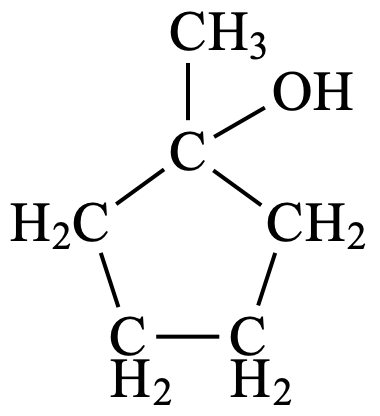
Structure A
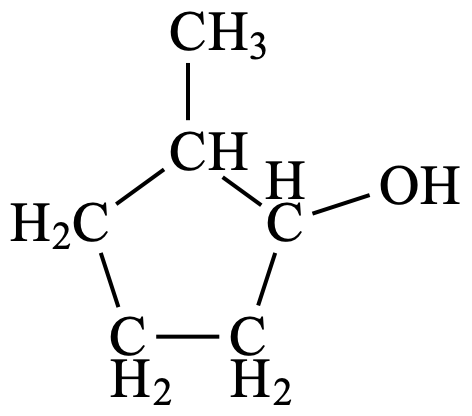
Structure B
Marker’s notes
- A hydration reaction occurs, where H and OH are added to either side of the double bond as indicated by the reaction conditions of H2O / H+. The reaction conditions of H+ / MnO4– indicate an oxidation reaction. As Structure A cannot be oxidised, it must be a tertiary alcohol. As structure B oxidises into a ketone, it must be a secondary alcohol.
Question 26(b)
Exemplar answer
Spectroscopic difference 1 (IR)
Structure A contains an –OH bond and will have a broad trough from 3230 – 3550 cm-1, while Structure C will not. Structure C contains a C=O bond and will have a sharp, deep trough from 1680 – 1750 cm-1, while Structure A will not.
Spectroscopic difference 2 (NMR)
In 13C NMR spectroscopy, Structure A will produce 4 peaks corresponding to 4 distinct carbon environments, while Structure C will produce 6 peaks corresponding to 6 distinct carbon environments. Structure A has fewer carbon environments than Structure C, despite containing the same number of carbon atoms, due to symmetry in its structure.
Answers could include
- Structure C contains a C=O bond in a ketone and will produce a peak at 190 – 220 ppm in 13C NMR spectroscopy, while Structure A will not produce a peak in this range.
- Structure A would produce 4 distinct peaks in 1H NMR spectroscopy due to 4 distinct hydrogen environments, while Structure C will produce 5 distinct peaks due to 5 distinct hydrogen environments.
- The signal integral ratio for the peaks produced by Structure A in 1H NMR spectroscopy will be 3:1:4:4, while the signal integral ratio for the peaks produced by Structure C will be 3:1:2:2:2
- The 1H NMR spectrum of Structure A will consist of two singlets and two triplets, while the 1H NMR spectrum of Structure C will consist of a doublet, a sextet, a triplet, a pentet and a quartet.
Question 27
Exemplar answer
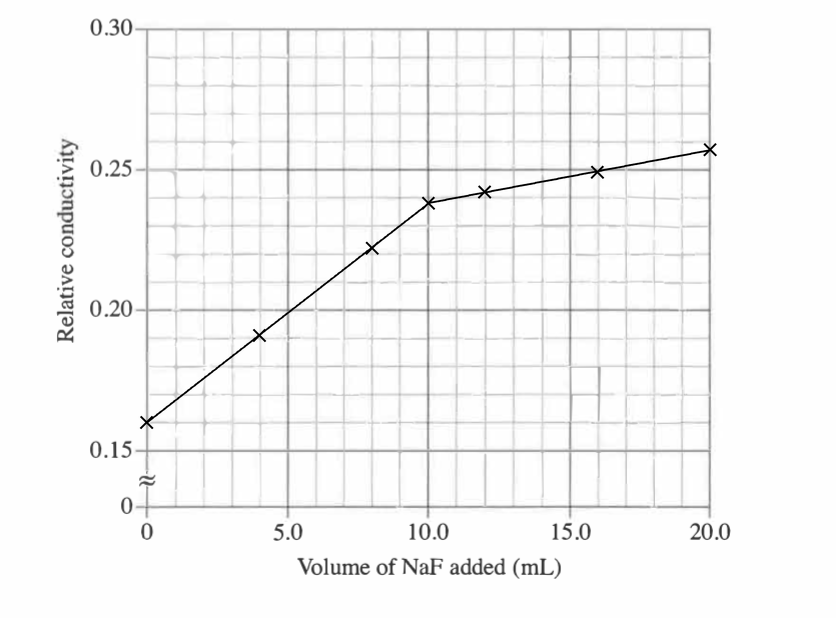
When the conductivity of the solution starts to plateau, this is when BaF2(s) precipitates and the solution first becomes saturated.
By interpolation:
V(NaF)added = 10 mL
n(F–)added = 1 x 0.01 = 0.01 mol
[F–] = 0.01 / (1 + 0.01) = 0.00990099009 molL–1
[Ba2+] = 0.01 x 1 / (1 + 0.01) = 0.00990099009 molL–1
BaF2(s) ⇌ Ba2+(aq) + 2F–(aq)
Ksp = [Ba2+][F–]2 = 0.00990099009 x (0.00990099009)2 = 9.7 x 10⁻⁷ (2 s.f.)
Question 28(a)
Exemplar answer
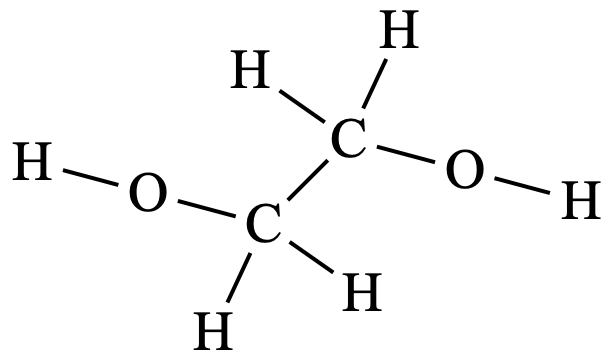
Monomer A
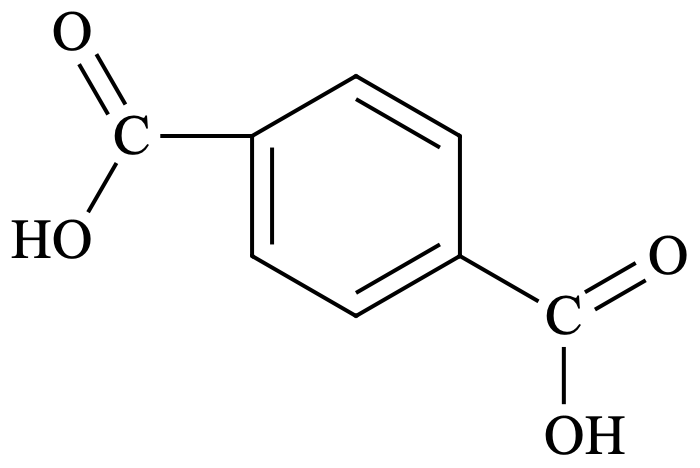
Monomer B
Question 28(b)
Exemplar answer
The ethanol molecules would react with the carboxylic acid (Monomer B) in an esterification reaction. This would prevent Monomer B from continuously forming ester linkages with Monomer A. As the ethanol only contains one functional group, it cannot further react to form polymers after reacting with Monomer B, effectively acting as a terminator molecule. This would result in the average polymer chain length decreasing.
Question 29
Exemplar answer
V(HCl)average = (29.6 + 29.8 + 29.7) / 3 = 29.7 mL
n(HCl)added = 0.1 x 0.0297 = 0.00297 mol
HCl(aq) + KOH(aq) → KCl(aq) + H2O(l)
n(KOH)25 mL = 0.00297 mol
n(KOH)in 250 mL = 0.00297 x 10 = 0.0297 mol
n(KOH)initial = 0.5 x 0.25 = 0.125 mol
n(KOH)reacted with oxalic acid = n(KOH)initial – n(KOH)in 250 mL = 0.125 - 0.0297 = 0.0953 mol
H2C2O4(aq) + 2KOH(aq) → K2C2O4(aq) + 2H2O(l)
n(H2C2O4) = 0.0953 / 2 = 0.04765 mol
n(H2C2O4 ⋅nH2O) = n(H2C2O4) = 0.04765 mol
MM(H2C2O4 ⋅nH2O) = 6 / 0.04765 = 125.9181532 gmol–1
MM(nH2O) = 125.9181532 – (2 x 1.008 + 2 x 12.01 + 4 x 16.00) = 35.8821532 gmol–1
∴ n = 35.8821532 / (2 x 1.008 + 16.00) ≈ 2
∴ H2C2O4 ⋅2H2O
Marker’s notes
- Some students may have recalled that oxalic acid commonly exists as oxalic acid dihydrate, which could have helped them verify their answer to this question.
Question 30
Exemplar answer
As the strength of intermolecular forces increases, more energy is required to overcome the intermolecular forces, resulting in a higher boiling point.
Propanone and propanamide are both polar molecules capable of forming dispersion forces and dipole-dipole forces. As the number of carbon atoms in each molecule is the same, they have similar molecular masses and thus form dispersion forces to a similar extent.
Propanamide contains both hydrogen bond donors (hydrogen atoms bonded to nitrogen) and an abundance of hydrogen bond acceptors (lone pairs of electrons on nitrogen and oxygen atoms), and is thus capable of forming the strongest intermolecular force, hydrogen bonding. As propanamide forms stronger intermolecular forces, it has a significantly higher boiling point than propanone, which is incapable of forming hydrogen bonds as it lacks hydrogen bond donors in its structure.
Answers could include
- Mentioning that propanamide is capable of forming a network of strong hydrogen bonds.
Question 31(a)
Exemplar answer
ClO–(aq) + H2O(l) ⇌ OH–(aq) + HClO(aq)
Kb = [HClO][OH–] / [ClO–] = 3.45 x 10⁻⁷
3.45 x 10–7 = x2 / (0.75 – x)
As the Kb is small, x is small. As such, 0.75 – x ≈ 0.75, by the small change assumption.
x = √(0.75 x (3.45 x 10–7)) = 0.00050867 molL–1 = 5.1 x 10⁻⁴ molL–1 (2 s.f.)
Question 31(b)
Exemplar answer
NaClO(aq) + 2HCl(aq) → Cl2(g) + H2O(l) + NaCl(aq)
n(HCl) = c x V = 2.5 x 12 = 30 mol
n(NaClO) = c x V = 1 x 0.75 = 0.75 mol
Assuming the reaction goes to completion:
n(NaClO)required = ½n(HCl) = ½ x 30 = 15 mol > n(NaClO)
Thus, NaClO is the limiting reagent.
n(Cl2) = n(NaClO) = 0.75 mol
V(Cl2) = n x Vm = 0.75 x 24.79 = 18.5925… L = 19 L (2 s.f.)
Answers could include
- Using the ideal gas law instead of molar volumes to calculate V(Cl2).
Question 32
Exemplar answer
Collision theory states that for a successful chemical reaction to occur, reactant particles must collide with sufficient energy above the activation energy and the correct molecular orientation.
Heat
By Le Chatelier’s Principle, a low temperature will favour the forward exothermic reaction, as this reaction releases heat. However, the temperature that is used for esterification cannot be too low, as this would result in reactant particles having lower kinetic energy and, by collision theory, the proportion of particles with sufficient energy to react would be lowered, resulting in a slow rate of reaction. Hence, heat is applied to supply a moderately high temperature such that the reaction can proceed at a considerable rate while still maintaining an appreciable equilibrium yield.
Reflux
Esterification involves the reaction of volatile organic chemicals. When heat is applied to the reaction mixture, significant evaporation would occur of the reagents, resulting in a lower equilibrium yield of the ester. Hence, a reflux condenser is used to cool and condense any evaporated reagents back into the reaction mixture, maximising the yield of the ester.
Concentrated H2SO4
The use of concentrated H2SO4 provides a catalyst for the reaction, providing an alternative pathway with a lower activation energy. By collision theory, a greater proportion of particles can overcome this lower activation energy barrier, resulting in more successful collisions and a greater rate of reaction. This will increase the yield of the ester within a set timeframe.
The concentrated H2SO4 further acts as a dehydrating agent, removing water molecules from the reaction mixture. This prevents collisions occurring between propyl butanoate and water in the reverse reaction, resulting in the forward reaction continually being able to occur to a greater extent. This also increases the yield of the ester.
Separating funnel
By adding water and Na2CO3 to the reaction mixture and placing it in a separating funnel, two distinct layers will form. The bottom layer is an aqueous layer, containing the water-soluble acid and alcohol, while the top layer contains the ester. By removing the bottom layer, a pure ester product may be obtained. Further purity may be achieved through fractional distillation.
Safety considerations
- Organic compounds are flammable and must not be used near an open flame to minimise the risk of explosions. Thus, the heat must be provided by a heating jack or a warm water bath.
- Organic compounds are volatile. To minimise the risk of inhalation, the reaction should take place in a fume hood.
Answers could include
- The magnitude of ∆H is very small, so the impact of temperature on the position of equilibrium is very small, and the impact of collision theory on the rate of reaction is thus a more significant consideration
- Not stoppering the top of the reflux condenser to prevent a pressure buildup and glassware shattering.
- Storing a neutralising agent (such as NaHCO3) nearby to neutralise any spills of concentrated sulfuric acid.
Question 33(a)
Exemplar answer
∆G = ∆H - T∆S
= –2803 – (298)(0.262) = –2880 kJmol–1 (3 s.f.)
Since ∆G < 0, the reaction is spontaneous.
Marker’s notes
- A common mistake students may have made in this question was failing to convert ΔS into kJmol–1K–1.
Question 33(b)
Exemplar answer
The combustion of glucose is exothermic because the energy required to break bonds in glucose and oxygen gas is less than the energy released when new bonds form in carbon dioxide and water. Therefore, the reaction has a forward enthalpy drive. Additionally, the positive entropy change indicates that the reaction also has a forward entropy drive.
Since both drivers of reactions are forward, ΔG° is highly negative, indicating that the combustion of glucose is highly spontaneous. A highly negative ΔG° corresponds to a very large equilibrium constant, meaning the equilibrium lies heavily on the side of the products. Consequently, the combustion of glucose is considered irreversible under normal conditions and is not an equilibrium system.
Question 34
Exemplar answer
3Co2+(aq) + 2PO43–(aq) → Co3(PO4)2(aq)
n(CO3(PO4)2) = m / MM = 0.842 / (3 x 58.93 + 2 x 30.97 + 8 x 16.00) = 0.002295967 mol
n(PO43–) = 2 x 0.002295967 = 0.00459193 mol (2:1 ratio)
m(PO43–) = n x MM = 0.00459193 x (30.97 + 4 x 16.00) = 0.4360959 g = 436.0959 mg
25 mL = 25 g = 0.025 kg (Assuming a density of 1.00 g mL-1)
c(PO43–)in ppm = 436.0959 mg / 0.025 kg = 17443.839 ppm = 17400 ppm (3 s.f.)
Question 35
Exemplar answer
Ion A
When HCl is added to the ion, bubbles form, indicating that the anion is CO32–, as it can react with an acid in an acid carbonate reaction, to produce carbon dioxide gas, which bubbles out of the sample.
2HCl(aq) + CO32–(aq) → 2Cl–(aq) + H2O(l) + CO2(g)
The pH test produces a pH > 7 as carbonate ions are weakly basic. The carbonate ions also form white precipitates in the presence of Ba2+ and Ag+ ions:
Ba2+(aq) + CO32–(aq) → BaCO3(s)
2Ag+(aq) + CO32–(aq) → Ag2CO3(s)
Ion B
Ion B is I–, as it forms a yellow precipitate with Ag+ ions:
Ag+(aq) + I–(aq) → AgI(s)
As I– is the conjugate base of a strong acid (HI), it produces a pH of 7, as it is an extremely weak base.
Ion C
Ion C is PO43–, which is weakly basic, confirmed by the pH test, which gives a pH >> 7. Phosphate ions form a white precipitate with Ba2+ and a yellow precipitate with Ag+:
3Ba2+(aq) + 2PO43–(aq) → Ba3(PO4)2(s)
3Ag+(aq) + PO43–(aq) → Ag3PO4(s)
Ion D
Ion D forms a green to blue precipitate when reacted with CO32– ions, indicating that Ion D is Cu2+:
Cu2+(aq) + CO32–(aq) → CuCO3(s)
This is confirmed as the nitrate salt of ion D dissolves in the presence of ammonia to form a dark blue solution, due to the formation of a complex ion.
Cu(NO3)2(s) + 4NH3(aq) + 2H2O(l) ⇌ [Cu(NH3)4(H2O)2]2+(aq) + 2NO3–(aq)
Ion D is a metal cation and thus does not contribute to the pH of the solution, producing a pH = 7.
Ion E
Ion E is Pb2+ as it is the only cation capable of forming a white precipitate with Cl– ions:
Pb2+(aq) + 2Cl–(aq) → PbCl2(s)
It can also form a white precipitate with CO32– ions:
Pb2+(aq) + CO32–(aq) → PbCO3(s)
Ion E is a metal cation and thus does not contribute to the pH of the solution, producing a pH = 7.
Ions F and G
Ions F and G produce identical results and are either Ba2+ or Mg2+. Both are metal cations, and thus do not contribute to the pH of the solution, producing a pH = 7.
Both can precipitate with CO32– ions to form a white precipitate
Ba2+(aq) + CO32–(aq) → BaCO3(s)
Mg2+(aq) + CO32–(aq) → MgCO3(s)
To distinguish between these two ions, a few drops of 0.1 M Na2SO4 could be added to samples of each salt. A white precipitate would form with Ba2+ ions, while Mg2+ will not precipitate:
Ba2+(aq) + SO42–(aq) → BaSO4(s)
Question 36
Exemplar answer
Structural formula:
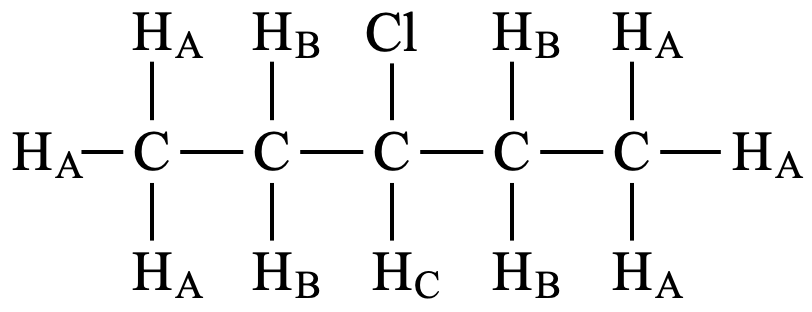
Name of the unknown substance: 3-chloropentane
Mass spectrum (Molar mass and halogen)
The parent peak of m/z = 106 and 108 is indicative of the molar mass of the molecular ion and the original compound being 106 – 108 gmol–1. This matches the molar mass of 3-chloropentane, which is 106.538 gmol–1.
It is given in the question that the compound contains carbon, hydrogen, and an unknown halide. A halogen must therefore be present in the molecular ion.
As halogens naturally exist in two abundant isotopes with a difference in mass number by 2, two parent peaks of comparable intensities are detected.
The halogen cannot be iodine or other heavier halogens, as iodine’s molar mass is 126.9 gmol–1, which is too large relative to the overall molar mass of 106 – 108 gmol–1.
The abundance of natural isotopes of Br, Br-79 and Br-81, are 51% and 49% respectively; while that of Cl, Cl-35 and Cl-37, are 76% and 24% respectively.
As the parent peaks of the mass spectrum, m/z = 106 and 108 exist roughly in the ratio of 3:1, this is more closely reflective of the isotopic composition of Cl, and thus the halogen must be chlorine, as is present in 3-chloropentane.
Subtracting the mass of Cl-37 from the parent peak at m/z = 108 leaves 71, which allows for 5 carbon atoms and 11 hydrogen atoms (5 x 12 + 11 x 1 = 71). This matches the molecular formula of 3-chloropentane of C5H11Cl.
Mass spectrum (Fragments)
Other fragments that can be hypothesised from the mass spectrum include:
- m/z = 15: CH3+
- m/z = 29: CH3CH2+
- m/z = 77 and 79: CH3CH2CHCl+, CH2ClCH2CH2+ or CH3CHClCH2+
All of these fragments are present in the 3-chloropentane described above.
Proton NMR spectrum
The proton NMR spectrum shows 3 signals, indicative of 3 distinct chemical environments. As the compound was identified to have 11 hydrogen atoms and no more than 3 hydrogen atoms can be bonded to a single carbon atom, there is likely a degree of molecular symmetry.
Signal A is a triplet, indicating 2 neighbouring hydrogen atoms by the n + 1 rule of spin-spin coupling. Similarly, signals B and C are quintets, indicating 4 neighbouring hydrogen atoms respectively.
This can be justified by the structure of 3-chloropentane, which is symmetrical about the centre carbon, with 3 hydrogen environments.
- HA: Corresponds to the signal A triplet, as it has 2 neighbouring HB
- HB: Corresponds to the signal B quintet, as it has 4 neighbouring hydrogens (3 HA and 1 HC)
- HC: Corresponds to the signal C quintet, as it has 4 neighbouring HB hydrogens
Proton NMR peak table
In addition, the peak integration is proportional to the number of hydrogen atoms in each environment.
The ratio of peak integration between HA, HB, and HC is 6.01 : 3.98 : 1.00 ≈ 6:4:1, which is reflective of the number of hydrogen atoms in each environment in 3-chloropentane.
Furthermore, the chemical shift of each signal can be rationalised, as HC is the atom closest to the electronegative Cl atom, and thus the most deshielded. This results in more energy required to change the spin state in the NMR spectrometer, and thus the highest chemical shift, at 3.60 ppm.
HB is the next closest hydrogen environment to Cl, resulting in the next highest chemical shift of 1.70 ppm, followed by HA’s chemical shift of 0.95 ppm.
Thus, as 3-chloropentane precisely matches each spectral data, it must be the analyte.
---
The small classes and exam-based approach at Cognito allows our talented, state-ranking tutors to personally help you get from where you're at to producing top-quality responses like these. Try out our 2-week obligation-free trial today and supercharge your HSC marks!